



Our Bakery Financial Model Structure covers all the essential aspects you need to consider when starting or scaling a Bakery business. By following this structure, you can better understand your revenue streams, costs, and assets, helping you optimize profitability and strategically plan for growth.
Crafting a well-structured financial plan is a crucial step for establishing or expanding a bakery business: this Bakery financial model outlines typical revenues, direct costs, employees, expenses, and assets you need to consider. It might also inspire you to identify new and profitable revenue streams; however, this requires careful analysis. Although the market is competitive, because of strategic planning, your business can thrive.
The Bakery Financial Model Structure
Revenues
A range of revenue streams can significantly enhance the financial engine of a bakery; however, it is essential to understand each component.
- Retail sales , for instance, are calculated by multiplying the average price per product by the quantity sold daily, then by the days the bakery operates each month.
- Wholesale supply , on the other hand, involves considering the number of products supplied to cafes or supermarkets, multiplied by the agreed wholesale price.
- Catering services are estimated based on the number of events catered, multiplied by the average revenue generated per event.
- Online orders , however, should take into account the average order value multiplied by the total orders processed monthly.
- Subscription boxes require calculating the price for each subscription times the total number of subscribers.
- Workshops determine revenue through the number of sessions conducted monthly, multiplied by participants per workshop and the fee charged per participant.
- Lastly, franchise fees may also contribute to earnings, if applicable. Thus, understanding these elements is crucial because they shape the overall Bakery financial model of the business.
Cost of Goods Sold
The cost of goods sold in a bakery includes ingredients such as flour, sugar, eggs, dairy, and chocolate; however, one must also consider packaging costs, which are often overlooked, and expenses on utilities that are directly related to production—like electricity and gas. This is crucial because these factors can significantly impact profit margins. Although these costs are sometimes underestimated, they play a vital role in the overall financial health of the business.
Employees
Typical staff for a bakery includes:
- Bakers are responsible for producing baked goods to the highest standard; however, they often face challenges in maintaining consistency.
- Sales assistants handle customer service and sales transactions, but they must also manage inventory replenishment because customer satisfaction is paramount.
- Delivery personnel ensure timely delivery of products to both wholesale and online customers, although logistics can be complex.
- Administrative staff manage bookkeeping and orders, as well as employee records, which is crucial for organizational efficiency.
- Marketing personnel focus on promotional activities to boost sales; this is essential for driving growth in a competitive market.
Operating Expenses
Common operating expenses include:
- Rent: Cost of leasing bakery premises.
- Utilities (expenses on electricity, water, and gas) are significant.
- Wages (monthly salary payments for employees) contribute to operational costs; however, insurance premiums for business protection policies also play a critical role.
- Marketing budgets (for promotional and advertising activities) are essential because they drive customer engagement.
- Supplies, which include non-ingredient consumables needed in daily operations, add up quickly.
- Maintenance costs (for equipment repair and upkeep) cannot be overlooked, although professional fees (payments for services like accounting or legal advice) represent another financial aspect.
- Licenses (fees for necessary business permits and health certifications) are mandatory.
- Furthermore, waste management expenses (tied to the disposal and recycling of bakery waste) must not be underestimated, but this is often where businesses find unexpected costs.
Assets
Key bakery assets include:
- Ovens: Essential for baking processes.
- Mixers (machinery utilized for preparing dough and batters) serve a critical role in culinary settings; however, display units (which showcase products to customers) are equally essential.
- Refrigeration units—necessary for storing perishable ingredients—are vital because they prevent spoilage.
- Delivery vehicles, although often overlooked, are important for efficient product distribution. This interconnectedness of equipment highlights the complexity of food preparation and service, but it also underscores the necessity of each component in the overall process.
Funding Options
Common funding sources include:
- Bank loans (conventional loans) are designed for small businesses; however, personal savings (owner’s own funds) are utilized as start-up capital.
- Investor funding, which may involve equity or angel investors, provides capital in exchange for ownership stakes.
- Grants, on the other hand, consist of non-repayable funds from government or private institutions that support new businesses.
- Because of this, entrepreneurs often seek a variety of financing options, although the choice can be challenging due to the multitude of factors involved.
Driver-Based Financial Model for Bakery
A truly professional Bakery financial model is grounded in operating KPIs (also known as “drivers”) relevant to the Bakery business. Key operational KPIs to consider might include:
- Daily Sales Volume (measure of products sold each day),
- Average Transaction Value (average revenue per customer transaction),
- Customer Footfall (number of customers visiting the bakery daily),
- Inventory Turnover Rate (frequency at which stock is replenished),
- Employee Efficiency (productivity measured by output per worker),
- Product Reject Rate (percentage of products that fail quality checks), and
- Referral Rate (proportion of new customers obtained through referrals).
Driver-based financial planning is the process of identifying key activities (“drivers”) that have the highest impact on business results; however, building your financial plans based on those activities is crucial. This approach allows you to establish relationships between financial results and resources needed to achieve those results (like people, marketing budgets, equipment, etc.), although it requires careful consideration.
If you wish to learn more regarding driver-based financial planning and the reasons it represents the optimal approach for planning, consider watching the founder of Modeliks elucidate the topic in the video below:
The Financial Plan Output
The objective of the financial forecast outputs is to enable you, your management, board, or investors to quickly grasp how your bakery business will perform in the future. This understanding is crucial because it provides comfort that the plan is thoroughly considered, realistic, and achievable. Furthermore, it is essential to comprehend what investments are necessary to implement this plan, as well as what the return on investment will be. To achieve these goals, here’s one one-page template to effectively present your financial plan:
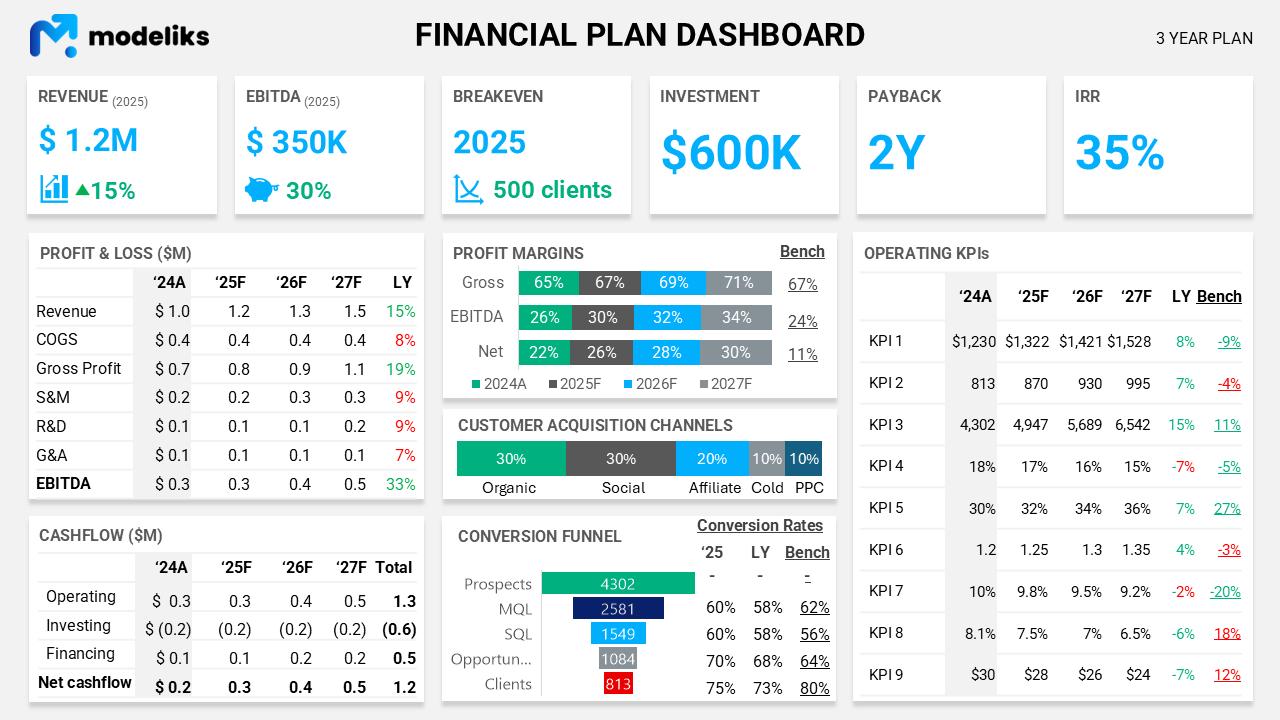
Aside from this one-page summary of your plan, you will need three projected financial statements. However, the clarity of this presentation can significantly impact your stakeholders’ confidence. Although it may seem straightforward, the intricacies involved cannot be underestimated.
- Profit and Loss Statement
- Balance Sheet
- Cash Flow Statement
Bakery Financial Model Summary
A professional and comprehensive Bakery financial model will aid you in thinking through your business; it will help identify the resources necessary to achieve your targets. Set goals, measure performance and raise funding, however, this can lead to making confident decisions to manage and grow your business. Although challenges may arise, you must remember that success hinges on effective planning.
If you need help with your financial plan, try Modeliks , a financial planning solution for SMEs and startups or contact us at contact@modeliks.com and we can help.
Author:
Blagoja Hamamdjiev
, Founder and CEO of
Modeliks
, Entrepreneur, and business planning expert.
In the last 20 years, he helped everything from startups to multi-billion-dollar conglomerates plan, manage, fundraise, and grow.