



Our Bar Financial Model Structure covers all the essential aspects you need to consider when starting or scaling a Bar business. By following this structure, you can better understand your revenue streams, costs, and assets, helping you optimize profitability and strategically plan for growth.
Starting or growing a bar business involves numerous intricacies; a well-crafted Bar financial model serves as a foundational guide. This model not only highlights typical revenues, direct costs, employee needs, and expenses, but also indicates necessary assets. However, considering these elements could inspire new and profitable revenue streams. A comprehensive financial model is crucial for understanding the financial structure and ensuring sustainability and profitability of your bar business, because it provides clarity. Although complexities abound, this foundation allows for informed decision-making.
The Bar financial model structure
Revenues
Revenue streams in bar business often encompass several categories:
- alcoholic beverages,
- non-alcoholic beverages,
- food sales,
- event hosting,
- merchandise sales,
- happy hour sales,
and cover charges.
Alcoholic beverages generate revenue by multiplying the average price per drink by the number of drinks sold. Non-alcoholic beverages also follow this principle, with the average price per drink multiplied by volume sold; however, food sales require a different approach. Food sales are determined by multiplying the average price of food items by the number of sales. Event hosting, although sometimes unpredictable, yields revenue calculated based on events per month multiplied by the average event fee.
Merchandise sales, because they depend on total items sold, can be estimated through multiplying item count by respective prices. Happy hour sales, on the other hand, consist of multiplying the average discounted price during happy hours by the number of items sold. Finally, cover charges involve calculating the total number of patrons paying fees by the average charge per person. This complexity of revenue streams illustrates how a bar can thrive in a competitive market.
Cost of goods sold
The corresponding costs of goods sold for these revenue streams include:
- Alcohol costs: Costs of acquiring alcoholic beverages.
- Non-Alcohol beverage costs: Expenses for purchasing non-alcohol drinks.
- Food costs: Prices of ingredients and food preparation expenses.
- Event costs: Costs for staffing and resources necessary for hosting events.
- Merchandise costs: Expenses associated with producing or acquiring merchandise.
However, these costs can fluctuate greatly because of market conditions and demand. Although expenses are clearly defined, the variability may impact overall profitability.
Employees
- Bartender: Prepares and serves drinks; maintains the bar area.
- Server: Attends to customers, takes orders, and delivers food and beverages.
- Chef/Cook: Prepares food items and manages kitchen operations.
- Manager: Oversees daily operations, coordinates staff, and manages budgets.
- Security Personnel: Ensures the safety of customers and premises.
Operating expenses
- Rent: Cost of leasing the bar premises encompasses various expenses.
- Utilities: Include payments for water, electricity, gas, and internet.
- Marketing: Involves costs associated with promotions and advertisements.
- Licensing Fees: Necessary because they cover liquor licenses and required permits.
- Insurance: Essential for safeguarding the property and business operations.
- Maintenance: Regular upkeep of the bar and equipment.
- Supplies: Include cleaning materials and glassware, which are also a vital expense.
- Music/Entertainment: Costs arise from fees paid for live performances or DJs.
- Professional Fees: Incurred for legal, accounting, and consulting services.
- Staff Training: Represents a significant investment in employee development.
Assets
- Bar Furniture: Tables, chairs, and bar stools provide seating for customers.
- Bar Equipment: Encompasses coolers, drink dispensers, and ice machines.
- Kitchen Equipment: Appliances like ovens, stoves, and refrigerators, play a crucial role in food preparation.
- POS System: Facilitates transactions and is essential in modern establishments.
- A/V Equipment: Includes sound systems and TVs that enhance entertainment options.
Although these components are varied, they collectively contribute to the overall functionality of the space. This integration is vital because it ensures a seamless experience for patrons.
Funding options
- Bank Loans: Represent a conventional means of securing funds from financial institutions.
- Investors: Provide an opportunity for equity financing through individual or group contributions.
- SBA Loans: Unique because they are government-backed loans designed for small businesses, which can be advantageous.
- Equipment Leasing: Allows firms to use assets without the need to purchase them outright.
- Personal Savings: Enable entrepreneurs to utilize their own funds for business operations, although it involves significant personal risk.
Driver-based financial model for Bar
A truly professional Bar financial model for a bar business is predicated on the operating KPIs (Key Performance Indicators) pertinent to the bar industry. These KPIs serve to gauge the long-term viability and success of a bar; however, their significance cannot be overstated.
- Average Revenue per Drink: Measures the average income from each drink sold.
- Customer Turnover Rate: The number of customers served per hour.
- Seat Utilization Rate: Percentage of seats occupied on average.
- Labor Cost Percentage: Ratio of labor costs to total sales.
- Event Attendance Rate: Average number of attendees per event.
- Inventory Turnover Ratio: How quickly inventory is sold and replaced.
- Operational Efficiency: Ratio of total sales to operating expenses.
Driver-based financial planning is the process of identifying key activities (also referred to as ‘drivers’) that exert the highest impact on business results. This is important because it enables you to build financial plans based on those activities. Although complex, it allows you to establish relationships between financial results and the resources needed to achieve those results (like people, marketing budgets, equipment, etc.).
If you desire to gain further insight into driver-based financial planning and its merits, consider the founder of Modeliks elucidating this concept in the video provided below.
The financial plan output
The objective of financial forecasting outputs should enable you, your management, board, or investors to quickly comprehend how your bar enterprise will perform in the future. It is essential to gain assurance that the plan is thoroughly considered, realistic, and attainable. Furthermore, understanding what investment is necessary to implement this plan and what the expected return on investment will be is crucial. To achieve these aims, here is a one-page template designed to effectively present your financial strategy.
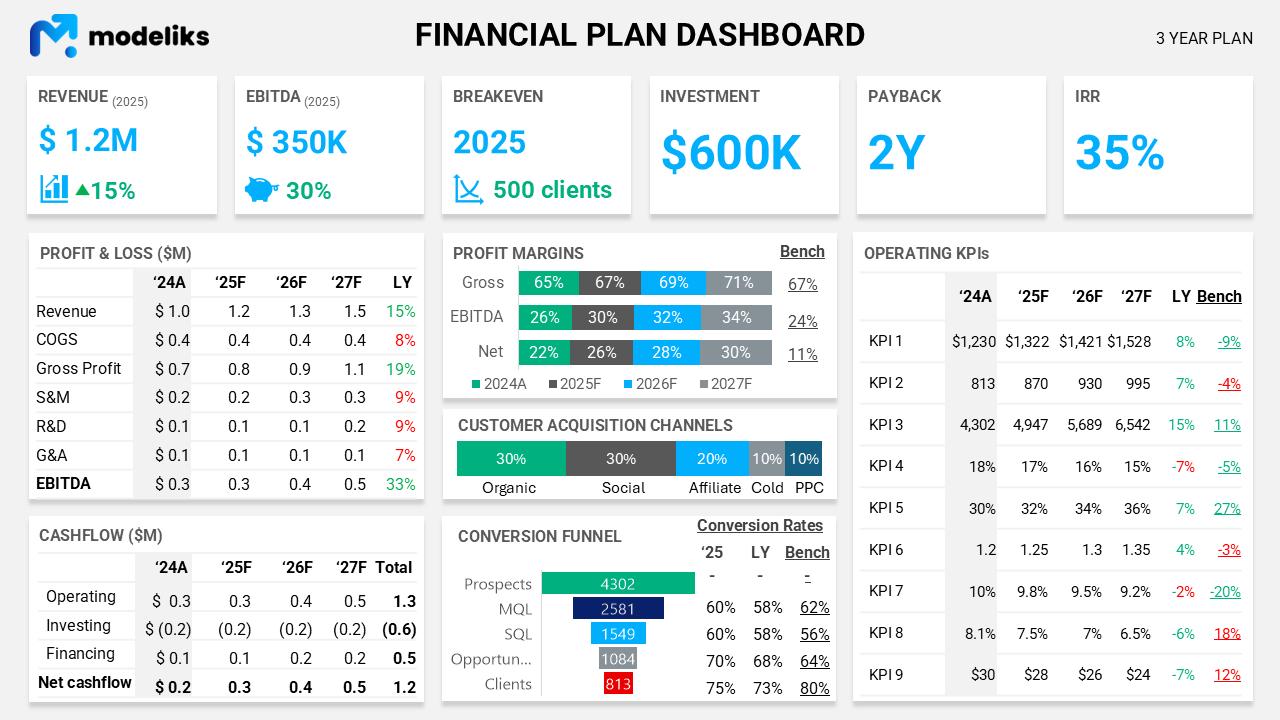
In addition to this one-page overview of your plan, you will require three projected financial statements:
- Profit and Loss: Illustrates revenue streams versus expenses, underscoring profitability.
- Balance Sheet: Offers insights into the bar’s assets, liabilities, and equity.
- Cash Flow Statement: Monitors the movement of cash in and out of the business.
However, crafting these documents can be challenging because clarity is paramount. Although the task may seem daunting, this template should guide you in presenting your financial outlook.
Bar financial model summary
A professional Bar financial model will assist you in thinking through your business; it identifies resources you need to achieve targets, sets goals, measures performance, raises funding, and makes confident decisions to manage and grow your business. By understanding and applying components of a financial model, bar owners can navigate the competitive landscape with clarity and precision—this ensures sustainable growth and success in the hospitality industry. However, many overlook its importance, but it is essential because it provides a framework for strategic planning and operational efficiency. Although it may seem daunting at first, mastering these elements is crucial for long-term viability.
If you need help with your financial plan, try Modeliks , a financial planning solution for SMEs and startups or contact us at contact@modeliks.com and we can help.
Author:
Blagoja Hamamdjiev
, Founder and CEO of
Modeliks
, Entrepreneur, and business planning expert.
In the last 20 years, he helped everything from startups to multi-billion-dollar conglomerates plan, manage, fundraise, and grow.