



Our Ice Cream Shop Financial Model Structure covers all the essential aspects you need to consider when starting or scaling a Ice Cream Shop business. By following this structure, you can better understand your revenue streams, costs, and assets, helping you optimize profitability and strategically plan for growth.
Financial planning is an integral step when launching or expanding your ice cream shop business. A comprehensive Ice Cream Shop financial model will help outline typical revenues, direct costs, employees, expenses, and assets you need to consider. This model not only provides structure; however, it might also spark ideas for new and profitable revenue streams, although you might overlook some opportunities. Because of this, having a solid plan is crucial for success.
The Ice Cream Shop Financial Model Structure
Revenues
Ice Cream Shops can generate revenue through various streams. Each revenue stream should be calculated appropriately:
- In-store Sales: Revenue from ice cream, beverages, and other products sold over the counter. Multiply the number of daily customers by average spending per customer and operational days per month.
- Online Orders: Sales generated from dedicated online platforms; consider order volume per day and average order value.
- Catering and Events: Income from catering services for events or parties. This can be calculated based on event frequency and average revenue per event.
- Wholesale: Revenue from supplying ice cream to local businesses or retailers. Calculate by products sold and their wholesale price.
- Merchandise Sales: Income from branded merchandise such as t-shirts, caps, or mugs. Estimate based on unit sales and price per item.
- Seasonal Offerings: Revenue from limited-time seasonal offerings. Although this is based on expected sales volume and price during the season.
- Membership Programs: From loyalty or subscription programs. Estimate based on membership fees and customer sign-ups.
- Franchising: Fees from franchising the brand. Calculate based on franchise agreements and fees, however, you must consider the market dynamics.
Cost of Goods Sold
The cost of goods sold (COGS) for these revenue streams encompasses ingredients, packaging, and direct labor involved in production. This is calculated by adding material costs per unit, packaging costs, and production labor costs; however, it is important to note that variations can occur. Although the process seems straightforward, the complexities arise because of fluctuating prices and operational efficiencies. Therefore, one must consider all factors when evaluating costs, but this can lead to unexpected outcomes.
Employees
Key employees in your ice cream shop typically include:
- Manager: Oversees day-to-day operations, inventory management, and employee supervision.
- Ice Cream Makers: Responsible for producing ice cream according to recipes. However, they must also ensure quality and consistency.
- Cashiers: Handle transactions and provide customer service at the counter, but they often face challenges during peak hours.
- Servers/Wait Staff: Serve customers and maintain cleanliness in the dining area; this is crucial because a tidy environment enhances the overall experience.
- Marketing and PR Specialist: Develops marketing campaigns and manages public relations, although they may encounter difficulties in reaching target audiences.
Operating Expenses
Typical operating expenses for an ice cream shop encompass various factors. However, these costs can fluctuate significantly depending on the season. Because the demand for ice cream peaks during warmer months, shop owners must adapt their budgets accordingly. This can be challenging, but understanding market dynamics is crucial. Although some expenses remain constant, others can vary widely, especially when promotions are involved. In conclusion, managing these expenses is essential for profitability.
- Rent: Lease payments for your shop location.
- Utilities: Water, electricity, and gas expenses that can significantly impact a monthly budget; however, they are essential for modern living.
- Salaries: Employee wages and benefits.
- Insurance: Coverage for business, property, and employees.
- Marketing and Advertising: Expenses for promotions and campaigns.
- Supplies: Costs for office and cleaning supplies.
- Maintenance and Repairs: Regular upkeep and repairs of equipment.
- Licensing and Permits: Fees for business operation licenses.
- Accounting and Legal Fees: Professional services for financial and legal advice.
- Point of Sale System Fees: Costs of transaction processing systems.
Assets
Typical assets essential for an ice cream shop include:
- Ice Cream Machines: Crucial equipment for production.
- Refrigeration Units: Necessary for storage of ingredients and finished products.
- Point of Sale System: Vital for managing sales transactions.
- Furniture and Fixtures: Tables, chairs, and decor for the shop.
- Transportation Vehicle: Although not always required, is needed for delivery services or supply transport.
Funding Options
Common funding avenues for an ice cream shop business include:
- Bank Loans: Traditional loans from financial institutions.
- Small Business Grants: Financial assistance from government or private organizations.
- Angel Investment: Capital from individual investors in exchange for equity.
- Crowdfunding: Raising small amounts of money from a large number of people, often via the internet. However, family and friends can offer loans or investments from personal networks.
Driver-based Financial Model for Ice Cream Shop
A truly professional Ice Cream Shop financial model is based on the operating KPIs (also known as “drivers”) that are pertinent to the business. Although there are many options, each comes with its own set of complexities and this can complicate decision-making.
Examples of operating KPIs include:
- Daily Customer Footfall: Number of customers visiting daily.
- Average Transaction Value: Average spending per customer; however, seasonal sales variations can lead to fluctuations in sales related to seasons.
- Production Volume: Quantity of ice cream produced daily.
- Ingredient Cost per Unit: Cost of materials for each unit produced.
- Labor Hours: Total work hours contributed by employees.
- Marketing Conversion Rate: Percentage of promotions converting to sales.
- Customer Retention Rate: Percentage of repeat customers.
- Franchise Royalties: Income from franchises, if applicable.
- Offer Redemption Rate: Use of promotional offers by customers.
Driver-based financial planning is a process; it’s also referred to as identifying key activities that have the highest impact on your business results. Subsequently, building financial plans based on those activities is essential. This approach allows you to establish relationships between financial results and resources needed to achieve those results, like people, marketing budgets, equipment, etc. Although you might be curious about driver-based financial planning, you can see the founder of Modeliks explaining it in the video below.
The Financial Plan Output
The objective of financial forecast outputs is to enable you, your management team, board, or investors to quickly grasp how your Ice Cream Shop business will perform in the future. This understanding provides comfort that the plan is well-thought-out, realistic, and attainable. Furthermore, it is crucial to comprehend what investments are necessary to implement this plan and what the expected returns on those investments will be. To accomplish these objectives, a one-page template exists for effectively presenting your financial plan.
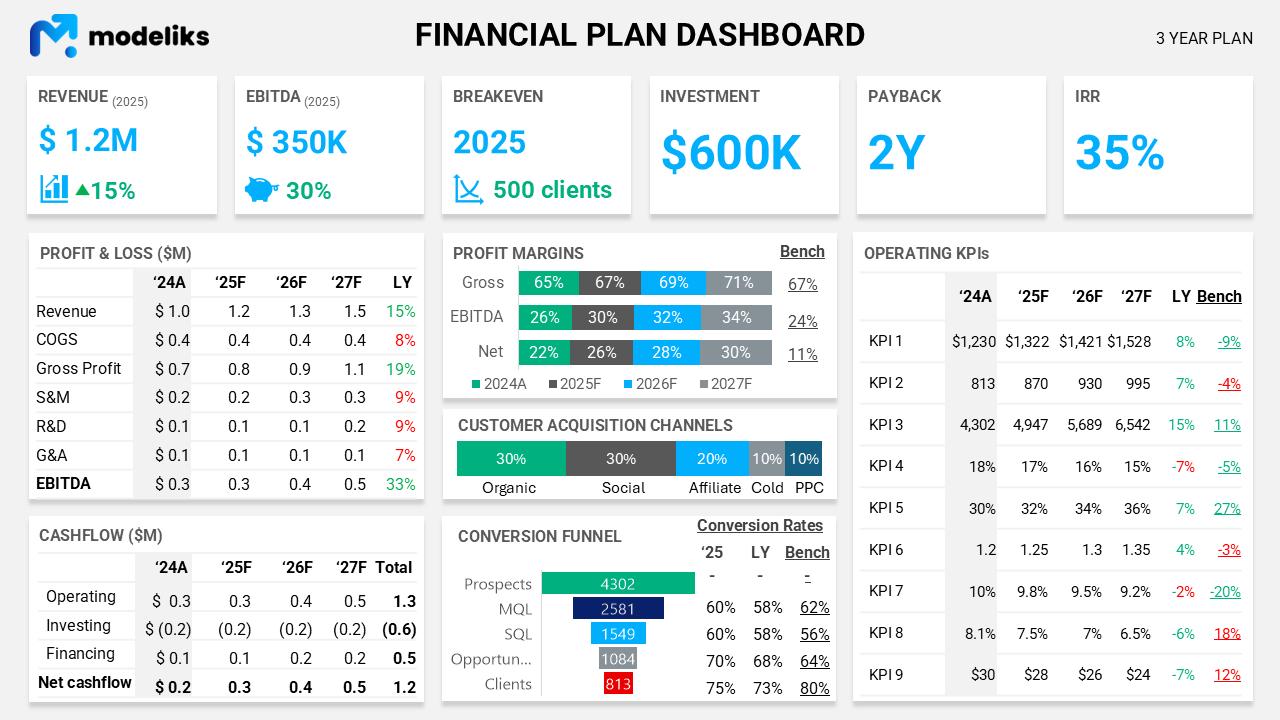
In addition to this summary, you will require three projected financial statements: the Profit and Loss statement, which illustrates income versus expenses over a defined period; the Balance Sheet, summarizing assets, liabilities, and shareholders’ equity; and the Cash Flow Statement, which highlights cash inflows and outflows. However, bear in mind that clarity is paramount, because without it, the effectiveness of your presentation may diminish. Although this may seem straightforward, the nuances of financial data require careful consideration.
Ice Cream Shop Financial Model Summary
A professional Ice Cream Shop financial model will assist in thinking through your business, identifying resources needed to achieve targets, setting goals, measuring performance, raising funding, and making confident decisions to manage and grow your business. However, some may overlook this crucial aspect. Although it can be complex, understanding these elements is essential because they contribute to long-term success. But, one must also consider the fluctuating market conditions that may impact outcomes. This model serves as a guide, ensuring clarity and direction in your entrepreneurial journey.
If you need help with your financial plan, try Modeliks , a financial planning solution for SMEs and startups or contact us at contact@modeliks.com and we can help.
Author:
Blagoja Hamamdjiev
, Founder and CEO of
Modeliks
, Entrepreneur, and business planning expert.
In the last 20 years, he helped everything from startups to multi-billion-dollar conglomerates plan, manage, fundraise, and grow.