


Our Specialty Food and Beverage Bars Financial Model Structure covers all the essential aspects you need to consider when starting or scaling a Specialty Food and Beverage Bars business. By following this structure, you can better understand your revenue streams, costs, and assets, helping you optimize profitability and strategically plan for growth.
The Specialty Food and Beverage Bars Financial Model Structure
Starting or growing a Specialty Food and Beverage Bars business requires comprehensive financial planning, encapsulated in a robust financial model. Such a model outlines the typical revenues, direct costs, employees, expenses, and assets to consider. It serves as a strategic tool, potentially revealing new and profitable revenue streams and is particularly vital for Specialty Food and Beverage Bars financial model development. However, this process can be complex because it demands careful consideration of various factors. Although the initial steps may seem daunting, the long-term benefits can be substantial.
Revenues
Typical revenue streams for a Specialty Food and Beverage Bars business include:
- Product Sales: Revenue is calculated by multiplying the number of units sold by the price per unit.
- Event Hosting: Revenue is generated from renting out space for private or public events.
- Membership Programs: Income comes from subscription-based services that offer exclusive benefits.
- Online Sales: This includes e-commerce sales of specialty products, calculated as units sold times the average selling price.
- Workshops and Classes: Revenue is calculated from fees charged for specialty workshops or classes, however, the actual income can vary.
- Catering Services: Revenue derives from event catering, calculated from contracts or event fees.
- Merchandising: Income from branded merchandise is computed as units sold multiplied by retail price.
- Sponsorship Deals: This revenue originates from brand partnerships and sponsorship opportunities, although the terms can differ significantly.
Cost of Goods Sold
The corresponding costs for these revenues might include the cost of raw materials, event setup costs, subscription content costs, shipping and handling for online sales; obtaining materials for workshops, food costs for catering, production costs for merchandise, and marketing costs associated with sponsorship deals. However, this complexity can be overwhelming, although it is essential to understand the impact of these expenses on the Specialty Food and Beverage Bars financial model. Some costs are variable, they can fluctuate significantly, but careful management is necessary to ensure success.
Employees
Your business will generally necessitate the following employees:
- Manager: Oversees day-to-day operations and staff management.
- Head Chef/Bartender: Responsible for creating specialty menus and managing kitchen or bar operations.
- Marketing Coordinator: Develops and implements marketing strategies.
- Event Coordinator: Manages event scheduling and customer liaison.
- Customer Service Representatives: Handles customer queries and sales transactions.
- Inventory Manager: Manages stock levels and orders supplies.
- Accounting and Finance Manager: Takes care of financial planning, reporting, and budget management.
- Janitorial Staff: Ensure cleanliness and maintenance of premises.
Operating Expenses
Common operating expenses include:
- Rent: Costs of leasing premises.
- Utilities: Regular expenses for electricity, water, and gas.
- Marketing and Advertising: Expenditure on promotional materials and campaigns can be quite significant.
- Supplies: Costs for everyday items needed for operations.
- Insurance: Provides coverage for premises, staff, and liability protection, although it can be costly.
- Licensing and Permit Fees: Costs associated with legal compliance, because they ensure adherence to regulations.
- Payroll: Encompasses salaries and wages paid to employees.
- Maintenance and Repairs: Upkeep expenses for equipment and property are necessary, although they can strain budgets.
- Professional Services: Fees for legal, accounting, or consulting services, which are often indispensable.
- Technology and Software: Investments such as point-of-sale systems and accounting software, necessary for efficiency, especially in today’s digital age.
Assets
Essential assets for this business typically include:
- Kitchen Equipment: Appliances and utensils for food and beverage preparation.
- Furniture: Tables, chairs, and other furnishings are important for customer comfort.
- Point of Sale Systems: Provide hardware and software for managing transactions.
- Inventory: Stock of products to be sold.
- Leasehold Improvements: Customizations made to rented properties for enhancing functionality.
- Vehicles: Used for transport, serving a crucial role in catering or deliveries; however, their necessity depends on the specific context.
Funding Options
The business can investigate numerous funding sources like:
- Bank Loans: Structured loans from financial institutions for capital needs.
- Angel Investors: Individuals providing capital for startup growth in exchange for equity.
- Venture Capital: Investment groups supplying substantial financing for proven business models.
- Self-Funding: Using personal savings or assets to support business operations.
- Crowdfunding: Collecting small amounts of capital from a large number of people, typically through internet platforms.
Driver-based Financial Model for Specialty Food and Beverage Bars
A driver-based financial model for Specialty Food and Beverage Bars is crucial; this model relies on the operating KPIs , also known as “drivers,” pertinent to the industry. Some examples include:
- Average Transaction Value, which represents the average amount spent per customer visit.
- Foot Traffic, the count of customers visiting the bar regularly.
- Seating Capacity Utilization reveals the percentage of seating occupied over time.
- Event Bookings denote the number and frequency of scheduled events.
- Cost Per Customer Served is the average expense incurred in serving each customer.
- Product Mix indicates the proportion of sales from varying product categories.
- Inventory turnover, the frequency at which inventory is sold and replaced over time, is essential.
- Market penetration rate, the percentage of the target market the business has reached, plays a crucial role too.
- Marketing ROI reflects return on investment from marketing campaigns, while customer retention rate indicates the percentage of repeat customers over a specific period.
Driver-based financial planning involves identifying key activities—drivers—that most affect business results and building financial plans based on those drivers. This approach helps establish connections between financial results and resources needed to achieve them, such as staffing, marketing budgets, and equipment. Although you may want to know more about driver-based financial planning, you should consider why it is the right way to plan; thus, see the founder of Modeliks explaining it in the video below.
The Financial Plan Output
The objective of the financial forecast outputs should enable you, your management, board, or investors to:
- Swiftly comprehend how your Specialty Food and Beverage Bars business will fare in the future.
- Gain reassurance that the plan is well considered, realistic, and attainable.
- Grasp what investment is necessary to execute this plan and what the return on investment will be.
To reach these goals, here is a one-page template on how to present your financial plan effectively.
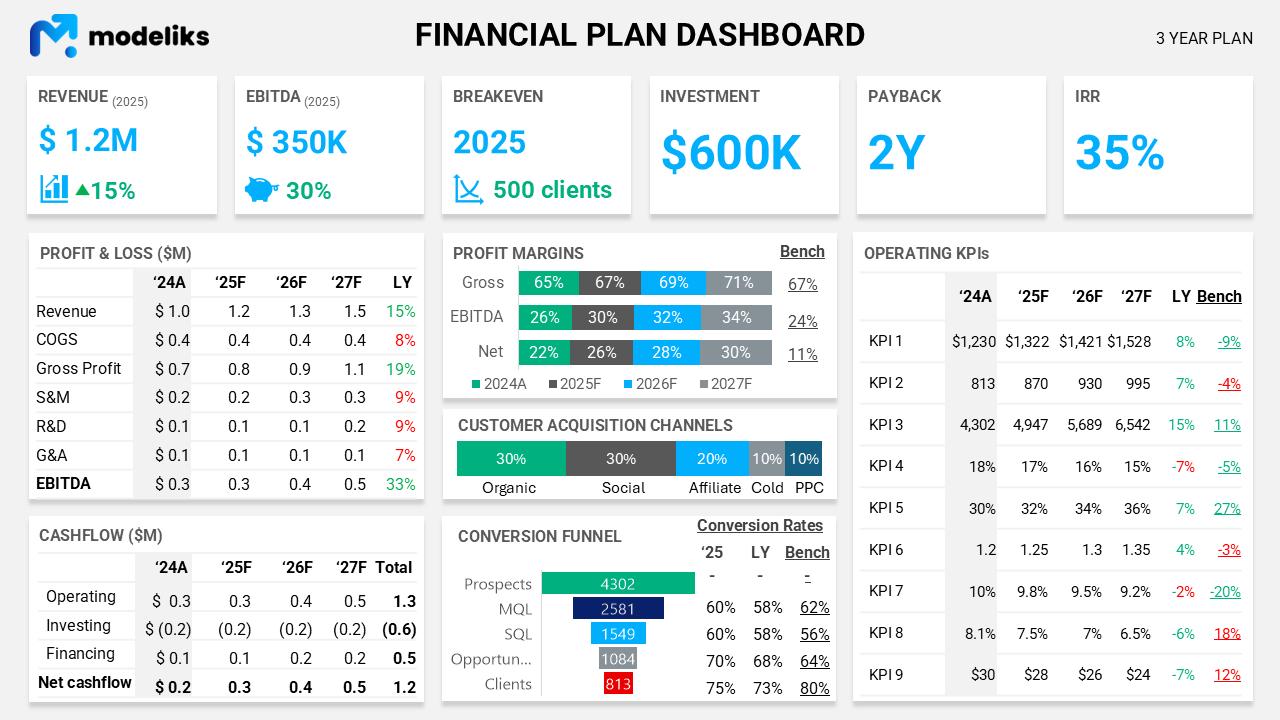
Aside from this one-page summary of your plan, you will require the three projected financial statements; however, this is crucial for clarity.
- Profit and Loss
- Balance Sheet
- Cash Flow Statement
Specialty Food and Beverage Bars Financial Model Summary
A comprehensive financial model for Specialty Food and Beverage Bars will assist you in thinking through your business. It helps identify resources needed to achieve targets; set goals, measure performance, raise funding, and make confident decisions for managing and growing your business. However, this process is complex, because it requires careful consideration of various factors. Although you may have initial ideas, the model’s intricacies can reveal new insights, guiding your strategies more effectively.
If you need help with your financial plan, try Modeliks , a financial planning solution for SMEs and startups or contact us at contact@modeliks.com and we can help.
Author:
Blagoja Hamamdjiev
, Founder and CEO of
Modeliks
, Entrepreneur, and business planning expert.
In the last 20 years, he helped everything from startups to multi-billion-dollar conglomerates plan, manage, fundraise, and grow.